
On this page
- What commercial gutter work can you call about?
- Why does roof size matter so much?
- What problems are common on commercial roofs?
- How is a commercial job planned?
- Who maintains commercial drainage?
- What should a commercial quote include?
- What about condo and HOA buildings?
- What about box gutters and internal drains?
- What are scuppers and conductor heads?
- What safety measures apply?
- What does a property maintenance schedule look like?
- How do multi-unit buildings differ?
- How is a commercial gutter quote different?
- What records should a property keep?
- Which buildings does this cover?
- Can work be scheduled outside business hours?
What commercial gutter work can you call about?
Gutters, box gutters, scuppers, collector heads and downspouts for buildings bigger than a house. Call (425) 215-1852 and describe the building, the roof and the problem. You will be connected with an independent contractor who takes on commercial work.
| Component | Where it is used |
|---|---|
| Large K-style (6-inch and up) | Pitched roofs on offices, clubhouses, condo buildings |
| Box gutters | Flat and low-slope roofs; where a larger channel is needed |
| Scuppers | Parapet walls on flat roofs |
| Collector heads | Below scuppers, feeding downspouts |
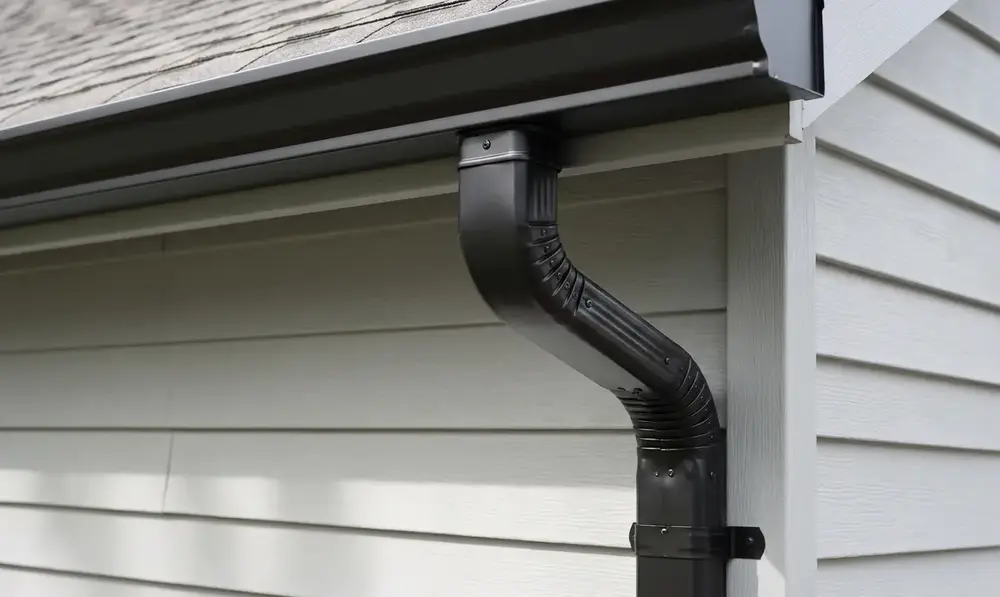
| Large downspouts | 3x4 inch and up, round or rectangular |
| Guards | Where trees overhang the roof |
Why does roof size matter so much?
Because volume adds up. Every inch of rain on 1,000 square feet of roof is about 623 gallons. Edmonds averages 37.2 inches a year, so 10,000 square feet of roof sheds roughly 230,000 gallons over a year, almost all of it between autumn and spring. Peak rates are moderate here, but a long run of rain finds every blocked scupper, undersized downspout and leaking box-gutter seam.
What problems are common on commercial roofs?
- Blocked scuppers and roof drains where needles and moss collect on flat roofs.
- Leaking box-gutter seams where long runs expand and contract.
- Downspouts over walkways, leaving slick paving and, on cold mornings, ice.
- Overflow onto entrances where gutters are too small or poorly drained.
- Moss on low-slope roofs, shedding grit into drains all winter.
How is a commercial job planned?
- Survey the roof: area, slope, parapets, existing drains and downspouts.
- Check code and engineering requirements for the building.
- Size the gutters and downspouts for the roof area each one serves.
- Plan discharge to the storm system, detention or a landscaped area.
- Schedule around occupants and plan safe access.
Who maintains commercial drainage?
The owner or manager. Edmonds manages stormwater under a municipal permit from the Washington Department of Ecology, and its Perrinville Creek action plan is one example of the city working to reduce stormwater impacts on local streams. Keeping a building's roof drainage clear is part of keeping the site's stormwater system working as designed.
What should a commercial quote include?
Gutter and downspout sizes and materials, joining and expansion details, bracket spacing, scupper and collector head details, discharge points, access equipment, schedule, warranty, and the contractor's Washington registration.
What about condo and HOA buildings?
Shared roofs mean shared decisions. Boards usually need a scope that covers every building, a schedule that minimises disruption, and clear responsibility for access, debris removal and any damage to landscaping. Ask for a maintenance plan as well as the installation price, because a cleaning schedule is what keeps a large system working year to year.
What about box gutters and internal drains?
Some older commercial buildings and churches have box gutters built into the roof edge or parapet, lined with metal or membrane, and drained by internal pipes. These need different skills from hanging K-style gutters: relining, rebuilding outlets and checking internal leaders. Ask whether a contractor works on built-in systems before booking.
What are scuppers and conductor heads?
On flat roofs with parapets, water often leaves through openings in the wall called scuppers. A conductor head is the box on the outside that catches scupper water and feeds a downspout. Both clog with leaves and moss grit, and a blocked scupper can pond water on the roof. They should be part of any commercial maintenance plan.
What safety measures apply?
Commercial roofs and tall walls need proper access and fall protection, and contractors are responsible for their own crews' safety under Washington workplace rules. Ask how the contractor will access the work, whether a lift is needed, and how the public and tenants will be kept clear below.
What does a property maintenance schedule look like?
| When | Task |
|---|---|
| Late autumn | Clean gutters, scuppers and conductor heads; check roof drains |
| After windstorms | Inspect for limb damage and lifted sections |
| Spring | Clear seeds, catkins and moss grit; flush leaders |
| Summer | Plan repairs and replacement in dry weather |
| Yearly | Scope or flush underground leaders and catch basins as needed |
How do multi-unit buildings differ?
Many condos and townhome communities have shared gutters and downspouts maintained by the association. One contractor and one schedule for the whole property avoids gaps where one owner's downspout clogs and floods a neighbor. Boards often ask for a written condition report with photos before budgeting replacement.
How is a commercial gutter quote different?
It usually includes access equipment, larger gutter and downspout sizes, more detailed drawings or measurements, and sometimes scheduling around tenants or business hours. Ask for a written scope with sizes, materials, access, timing, cleanup and warranty, and for proof of the contractor's L&I registration and insurance.
What records should a property keep?
A simple drainage map showing gutters, downspouts, scuppers, drains and underground lines, with dates of cleaning and repairs. It speeds up future work and helps new managers or boards understand the system.
Which buildings does this cover?
Small offices, shops and strip centers, churches, schools, apartment and condo buildings, warehouses and mixed-use buildings around Edmonds and nearby towns. Each has different roof shapes and drainage, so the first step is a site visit and a written assessment.
Can work be scheduled outside business hours?
Often. Many contractors can work early, late or on weekends to avoid disrupting customers and tenants. Ask when you request a quote, as it may affect the price.